San Diego Commands Lowest Office Vacancy Among Major US Markets
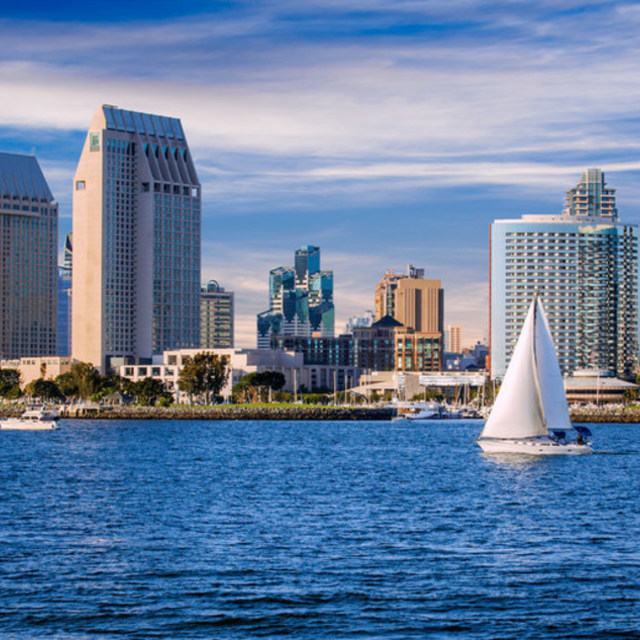
San Diego has the lowest vacancy among all major U.S. office markets. This is according to JLL?s 2025 San Diego Office Resilience Report.
The city's suburban Class A continues to outperform. However, downtown vacancy is rising due to speculative deliveries.
Still, limited vacancy exists in new multi-tenant construction properties, reinforcing the continued premium commanded by quality assets in the central core cluster submarkets, according to the report.
However, a significant amount of new and unleased office space was delivered downtown during 2024 and 2025, increasing the vacancy rates and putting downward pressure on rents in the urban area.
Flight to quality persists as tenants gravitate toward newer, higher-quality buildings in locations such as University Town Center (UTC), Del Mar Heights and Mission Valley. Kearny Mesa and Mission Valley are the top improving ?return-to-office? submarkets.
New construction and well-amenitized projects are experiencing minimal vacancy rates while achieving higher rents as tenants prioritize high-quality space.
Investment activity is increasing with buyers being attracted to office space available at discounts. Technology, defense and AI-driven innovation firms are poised to shape the next leasing cycle, according to the report.
Tech firm leasing activity is most pronounced in suburban areas, including Sorrento Mesa, Rancho Bernardo, Del Mar Heights and UTC.
However, with nearly 40 million square feet of tenant leases expiring by 2030 and continued tenant downsizing, available inventory could increase even at the current conversion pace. Particularly, performance in the downtown offices sector faces challenges from financial and legal firms opting to downsize.
The innovation economy continues to drive fundamentals with technology and defense companies representing 28% of office occupancy and $17.7 billion in tech funding from 2020-2025, positioning San Diego for growth, Richard Gonor, JLL managing director, told GlobeSt.com.
?What's particularly striking is the extreme bifurcation we?re seeing - while suburban Class A properties maintain strong performance with minimal vacancy, Downtown has experienced significant pressure from substantial new spec deliveries,? Gonor said.
The market's unique transformation is evident in the conversion of over nine million square feet of existing office space into biotech labs, housing and medical facilities, helping stabilize overall vacancy rates, he said.
?Perhaps most surprisingly, investment sales have rebounded significantly, with vintage or obsolete Downtown assets trading at steep discounts of $85-$190 per square foot, while suburban properties are commanding $200s-$300s per square foot, creating generational opportunities for value investors,? according to Gonor.
Several stabilizing factors ? including office-to-housing conversions and limited future speculative development ? should support medium-term market resilience despite softening rent growth and ongoing tenant downsizing, according to JLL.
Source: GlobeSt/ALM