Miami Snags Hottest Rental Market Spot Thanks to Tech and Finance Offering
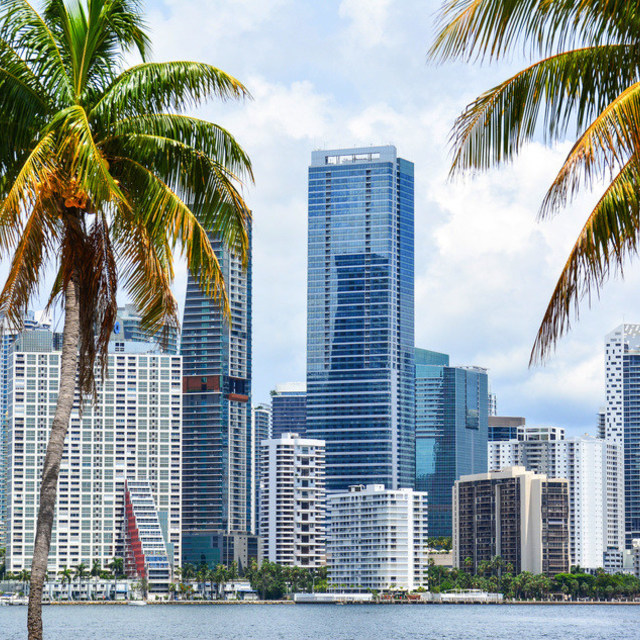
RentCafe is out with its new Rental Competitiveness Index (RCI) for 2025 and it shows that in some big-city markets like South Beach, as well as in some small towns that finding an apartment to rent requires patience.
“Although more than half a million new apartments were built this year, the U.S. rental market shows little sign of cooling. Of the 137 metros analyzed, only about 18% softened compared to 2024,” the report noted.
“Fortunately, flexibility and convenience are keeping renters in the game, even as demand for rental apartments continues to climb in the hottest rental markets of 2025."
The RCI score rose to 75.2 this year, up from 74.4 in 2024. Miami ranked as the nation’s hottest rental market with an RCI of 92.9, followed by Chicago and its suburbs with RCIs of 88.2 and 88.1, respectively. Next up were Manhattan with an RCI of 84.5 and Milwaukee, with an RCI of 84.2.
Beyond its beaches and retirees, Miami’s draw was its growing status as a tech and finance hub, snagging talent and capital from Wall Street, Silicon Valley and abroad, as well as local demand.
Chicago appealed thanks to its “big-city excitement, job opportunities, top universities and amenities” — but a drop in new apartment construction made the hunt even more challenging, leading to increased rent renewals and occupancy, a trait in common with its suburban areas, where occupancy now stands at 95.5%, according to RentCafe
The occupancy rate in Manhattan was similar, as its return-to-work policies and new arrivals drove it to become the nation’s fourth toughest apartment market. Surrounding borough Brooklyn is slightly more available, but competition in Queens is heating up.
The Suburban Twin Cities – Minneapolis and St. Paul – exhibited the largest RCI increase of all the metros analyzed. The report attributed this to its affordability, strong schools, shorter commutes and easy access to the great outdoors, as well as the safer atmosphere of their suburbs.
Other top trending rental markets were San Francisco, Philadelphia, Pittsburgh, Suburban Atlanta, Broward County and Jacksonville.
In each of the 137 markets studied, the higher the RCI, the fewer the average number of days an apartment was likely to be vacant. The larger the number of would-be tenants beating at the door for a chance to rent, and the higher the number of occupied apartments in the area.
Nationwide, the occupancy rate rose to 93.3%. In the 30 most competitive rental markets, the number of prospective renters for each apartment was generally in the double-digits and ranged from a low of seven to a high of 19 in Miami. In these markets, lease renewal rates were primarily in the 60% to 70% range and in one case, Central New Jersey, the rate was 80.2% — a trend which made it even harder to find a suitable apartment.
Adding to the difficulties was the fact that tenants with longer leases are more likely to renew and stay in their apartments for an average of 28 months. This amount went up to 37 months in the Northeast.
By region, the Northeast earned the highest RCI of 80.6, followed by the Midwest (80.3), Florida (79.5), the South (76.4), Mid-Atlantic (76.1), California (74), Southeast (72.8), Southwest (72), Pacific Northwest (70.6) and West (69.3).
The report pointed out that even some small cities had high RCIs, especially in the Midwest, which claimed six of the top 20 places among competitive small metros. Fayetteville, AR, earned an RCI of 92.4 – up 3.7 points from 2024. Apartments there are leased in 22 days – the fastest rate in the nation – and vacancy is less than 4%, with 12 applicants for each one. This is thanks to enrollment at the University of Arkansas and new jobs locally provided by Walmart.
Port St. Lucie, FL, turned out to be the nation’s fastest-rising place for renting an apartment, helped by a fall in new construction and rising numbers of retirees and refugees from high prices in South Florida.
“Finding a place to call home was no easy task this year,” RentCafe admitted.
Source: GlobeSt/ALM